Physical Address
304 North Cardinal St.
Dorchester Center, MA 02124
Physical Address
304 North Cardinal St.
Dorchester Center, MA 02124

Replacing a traditional storage tank water heater with a tankless model is a decision that can affect both your energy costs and daily convenience—especially if you live in a cold climate or have a large household. The APUS 190000 BTU tankless water heater is one of the more powerful propane-driven options on the market, promising up to 8.1 gallons per minute (GPM) and the ability to run multiple showers and faucets at the same time. But does it live up to the promise? In this APUS 190000 BTU tankless water heater review, we’ll examine the manufacturer’s claims, the included features, and what you should consider before buying.
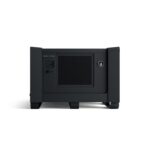
The APUS 190000 BTU outdoor tankless water heater (model AP-AWH-W26LPG) is a propane-powered, whole-house instant hot water system. It is designed for outdoor wall mounting only (not for indoor installation) and delivers on-demand hot water without the need for a storage tank. Key characteristics include:
The APUS targets homeowners who already have propane service or are willing to install an outdoor propane tank, and who want a compact unit that still offers high flow rates for simultaneous use.
Below is a detailed look at the main specifications and technologies claimed by APUS. Note: These are based on manufacturer data and publicly available information; real-world performance may vary based on installation, incoming water temperature, and local gas pressure.
| Feature | Specification / Detail |
|---|---|
| Heat Output | 190,000 BTU (propane) |
| Flow Rate | 8.1 GPM (max) |
| Minimum Flow to Activate | 0.79 GPM |
| Temperature Range | 95°F – 149°F |
| Temperature Accuracy | ±1°F (claimed) |
| Dimensions (W×H×D) | 22.48 × 15.51 × 6.54 inches |
| Mount Type | Outdoor wall mount |
| Power Source | 120V AC (required for electronics & fan) |
| Water & Gas Connections | ¾-inch NPT (standard) |
| Heat Exchanger Material | 100% oxygen-free copper (claimed to be 30% more efficient than conventional copper) |
| Combustion Technology | Intelligent staged combustion (20% energy savings claimed) |
| Wind Resistance | 10-level wind rating |
| Anti-Freeze Protection | Electric heating element (active freeze protection) |
| Smart Home Compatibility | Works with Tuya App (WiFi) |
| Warranty | 2-year full coverage on all components |
| Certifications | UL/ETL (as per typical APUS units; verify model) |
The unit also includes a wired remote controller with a 16-foot cable, allowing you to set the temperature from inside the house or near the point of use.
According to the product listing, the package includes:
It is worth noting that the water and gas connections are standard ¾-inch NPT, so you will need to supply your own shut-off valves, flexible gas line, and water lines. Professional installation is strongly recommended.
The unit is designed for outdoor installation only—it must be mounted on an exterior wall that can support its weight and with adequate clearance around the unit for proper ventilation. Typical installation steps include:
Important: Always follow local building codes. Improper installation can lead to gas leaks, fire hazards, or carbon monoxide exposure.
Once installed and powered, the heater operates on demand. When you open a hot water tap, the unit’s electronic ignition lights the burner, heating the water as it passes through the copper heat exchanger. The temperature can be set via the wired controller or the app anywhere between 95°F and 149°F in 1°F increments.
The manufacturer states a minimum flow of 0.79 GPM is needed to trigger ignition—a lower than average threshold that helps the unit work well even with low-flow fixtures. The smart seasonal technology adjusts the gas flow based on incoming water temperature to improve efficiency.
Because we have not personally tested this unit, we rely on manufacturer specifications and aggregated customer feedback (as of this writing, the product has a 4.3-star rating from 42 reviews on Amazon). Common themes from users include satisfaction with the strong flow rate, ease of temperature adjustment, and the compact size. Some have noted that the unit is quiet during operation and that the WiFi control works reliably once set up.
On the flip side, a few reviewers reported difficulty with the initial setup, particularly if they were not experienced with gas plumbing. Others mentioned that in very cold climates (incoming water below 40°F), the flow rate needed to be reduced to achieve the desired temperature—this is normal for any tankless heater. The claimed ±1°F accuracy appears to hold true for steady flow conditions.
It is important to set realistic expectations: the maximum 8.1 GPM flow rate assumes a 35°F temperature rise (e.g., from 70°F to 105°F). For larger temperature rises (common in northern winters when incoming water may be 40°F), the actual GPM will be lower. Calculating your required flow rate using the formula GPM = BTU / (ΔT × 500) can help determine if this unit is suitable for your home.
To help you decide, here is how the APUS compares with two other popular tankless water heaters in a similar category (no pricing included):
| Product | BTU / kW | GPM (max) | Fuel | Indoor/Outdoor | Smart Features | Notable Difference |
|---|---|---|---|---|---|---|
| APUS 190K BTU | 190,000 BTU | 8.1 GPM | Propane | Outdoor only | WiFi + wired remote | High wind resistance, low min flow |
| Rheem RTEX-13 | 13 kW (44,000 BTU equiv.) | 3 GPM (electric) | Electric | Indoor/outdoor | No WiFi | Much lower flow; good for small homes or point-of-use |
| Rinnai RUC98i | 199,000 BTU (NG/LP) | 9.8 GPM (NG) | NG or LP (convertible) | Indoor/outdoor | WiFi (Rinnai Control-R) | Higher flow, condensing (96% efficiency), higher price |
The APUS sits in the mid-range of propane tankless heaters—its 8.1 GPM is suitable for homes with 2–3 bathrooms, but a condensing unit like the Rinnai offers slightly higher flow and indoor installation flexibility. If you do not have propane service, an electric tankless (like the Rheem) may be an alternative, but its flow rate will be significantly lower.
The APUS 190000 BTU tankless water heater is available online through major retailers. The product listing we reviewed offers the unit with standard packaging. If you decide to purchase, consider verifying the seller’s return policy and warranty support.
After analyzing the specifications, user feedback, and comparing it with alternatives, the APUS 190000 BTU tankless water heater appears to be a capable and well-featured propane unit for homeowners who need whole-house hot water output. Its smart controls, wind resistance, and low activation flow set it apart from many basic tankless models. However, its outdoor-only design and reliance on 120V power are limitations to consider.
If you already have propane and need a compact, smart-capable tankless heater, the APUS is worth considering. For those who require indoor installation or want to use natural gas, other models may be a better fit. As with any major appliance, professional installation is strongly advised to ensure safety and optimal performance.
For a deeper look into other tankless water heater options, check out our guide to best tankless water heaters and our propane vs. electric tankless comparison.
No. This unit is designed for outdoor wall mounting only. Installing it indoors would create a safety hazard (carbon monoxide) and violate building codes. The manufacturer explicitly states outdoor use.
Yes, the heater requires a 120V AC electrical connection to power the control board, fan, and electronic ignition. It will not operate during a power outage.
According to the manufacturer, the minimum flow is 0.79 GPM. This is lower than many tankless units (typically 0.5–1.0 GPM) and allows the heater to work well with low-flow faucets and showers.
Since the unit is instantaneous, hot water arrives as soon as the cold water in the pipes between the heater and the tap is pushed out. This “lag time” depends on the distance from the heater. The burner typically lights within seconds of flow.
The product does not include a built-in recirculation pump or dedicated return line. However, you can add an external recirculation system, but the manufacturer’s instructions should be consulted to avoid false firing.
The unit comes with a 2-year full warranty on all components, covering parts and labor (as stated in the product details). Registering the product after purchase is recommended.
Yes, but you must install adequate filtration to remove sediment and minerals. Hard well water without softening will lead to rapid scaling and reduce the life of the heat exchanger.
No, it uses an electronic hot surface or spark ignition (typical for modern tankless units). There is no standing pilot, which improves efficiency.
Subscribe to our newsletter for more honest product reviews, energy-saving tips, and buying guides delivered to your inbox.
This article contains affiliate links. As an Amazon Associate, we earn from qualifying purchases at no additional cost to you. Our reviews are independent and based on research and user feedback. We only recommend products we believe add value to our readers. See our full disclosure policy for more details.